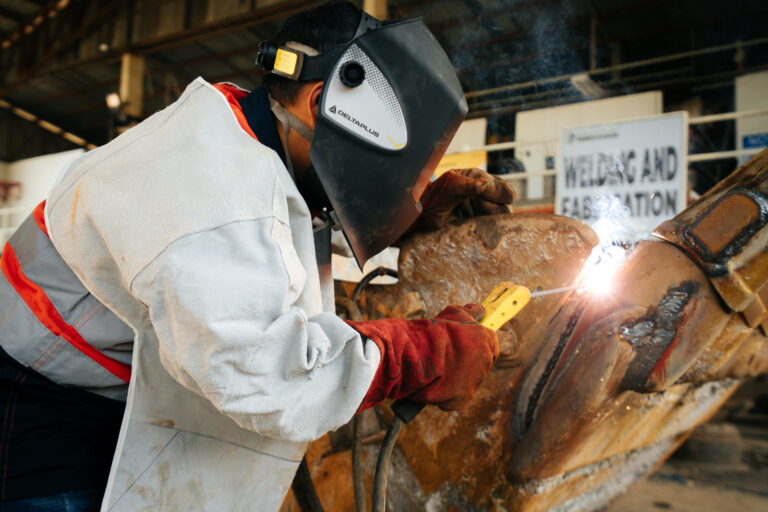
Greenstone helps local women build careers and reshape perceptions through training
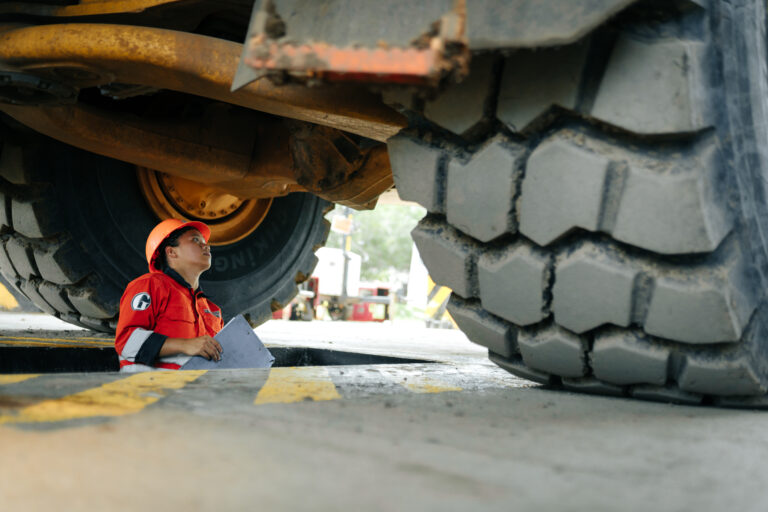
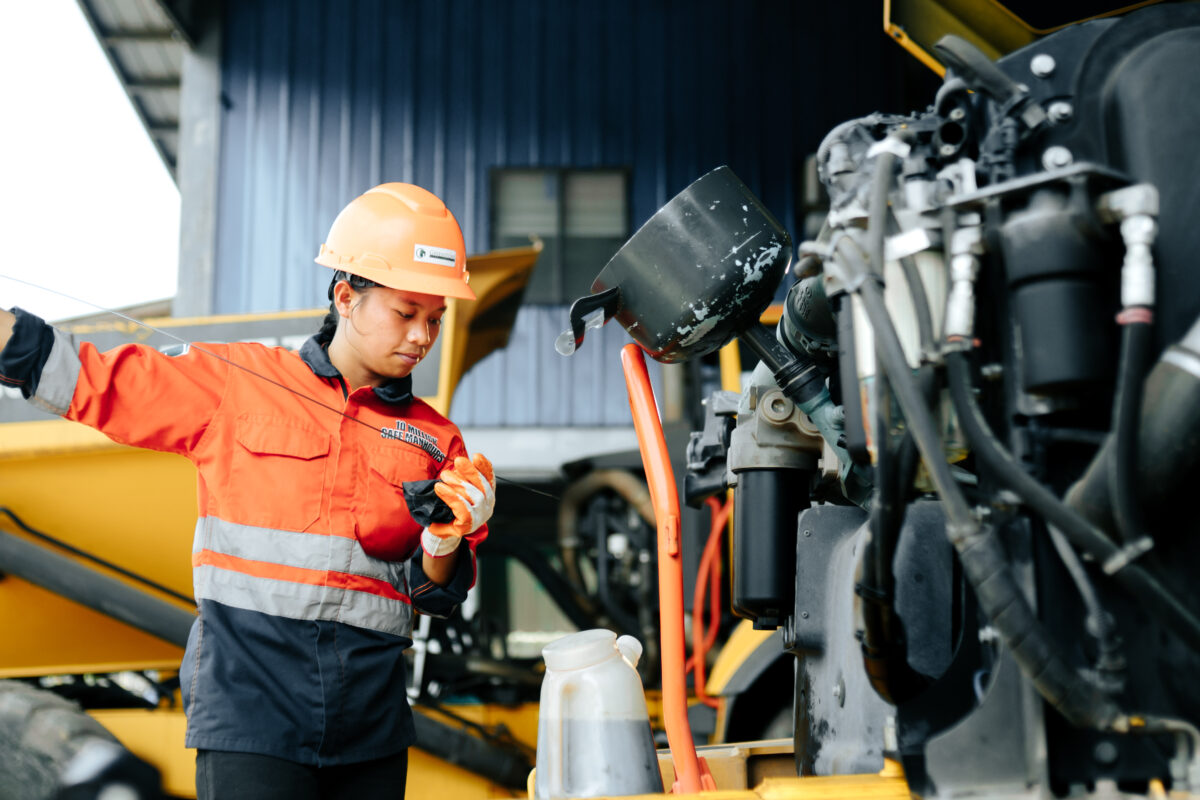 From training to trade: Mary Jane Domo, a graduate of Greenstone’s technical livelihood training program, is making her mark as a mechanic in the mining field. (in Photo): Domo checks the engine oil level of an Articulated Dump Truck (ADT), one of the many maintenance tasks she now carries out with confidence.
Tubod, Surigao del Norte / July 2026 — The most meaningful livelihood opportunities are those that allow people to build a future within their own communities. When industries invest not only in infrastructure but also in the capabilities of local residents, economic growth becomes more inclusive, and its benefits become more sustainable. By equipping individuals with practical skills that meet industry standards, companies help create pathways to employment while enabling communities to take part in the opportunities generated by development.
Increasingly, these pathways are being shaped by women. Across Greenstone Resources Corporation (GRC), a subsidiary of TVI Resource Development Philippines Inc. (TVIRD), women are stepping into technical trades long viewed as male-dominated—working as heavy equipment operators, mechanics, and welders—through the company’s livelihood training programs.
Investing in Local Talent
One of Greenstone’s key livelihood initiatives is the Heavy Equipment NC II Training Program. Implemented for residents of its host and neighboring communities, the program provides participants with the technical knowledge and practical competencies required in heavy equipment operations. Beyond preparing individuals for work in the mining industry, the initiative also seeks to strengthen local employability, promote sustainable livelihoods, and create opportunities for community members to build careers close to home.
The Technical Education and Skills Development Authority (TESDA) National Certificate (NC) II is a nationally recognized qualification that certifies an individual’s competency in a specific trade. In heavy equipment operation, the certification validates the knowledge and practical skills needed to operate machinery safely and efficiently. These competencies are essential in an industry where operational performance depends on responsible equipment handling, adherence to safety standards, and technical proficiency.
According to Greenstone Fleet Manager Engr. John Gerald Nofuente, the current batch of trainees already possesses operational experience, allowing the program to focus on refining existing competencies rather than introducing fundamental concepts.
“Since the trainees are already operators, we are focusing on efficiency and safety,” he explained.
This approach allows participants to strengthen the skills that are most critical in daily mining operations. Greater operational efficiency contributes to improved equipment utilization, while safe operating practices help reduce workplace risks and support the reliability of mining activities.
This initiative also reinforces Greenstone’s commitment to empowering local communities by expanding access to sustainable livelihoods. Several graduates of the Heavy Equipment NC II Training Program from its host communities have since secured employment within the company—proof that industry-recognized technical skills can translate into meaningful, lasting careers while contributing to the long-term economic development of the communities surrounding Greenstone’s operations.
For Engr. Nofuente, investing in local talent is an important responsibility that goes hand-in-hand with the company’s presence in the community.
“Developing local talent is really a must since we owe this to the local community. It is our social responsibility to give back to the locals by training them and giving them a fair chance,” he said.
Opening Doors for Women
The program has also created opportunities for greater participation among women in technical occupations. Although heavy equipment operation has traditionally been viewed as a male-dominated profession, Greenstone continues to recognize the value women bring to the workplace through their professionalism and attention to detail.
Drawing from his experience in fleet management, Engr. Nofuente shared observations that have shaped his perspective on women working in equipment operations.
“Hiring women as backhoe and compactor operators is a gem. Women tend to be more focused and more safety-oriented when operating their units. They also maintain cleaner equipment, and good housekeeping contributes to better workplace practices,” the fleet manager shared.
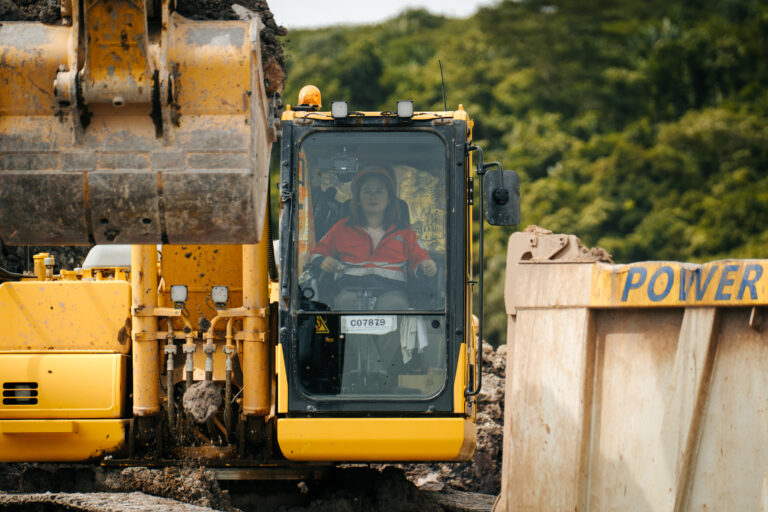
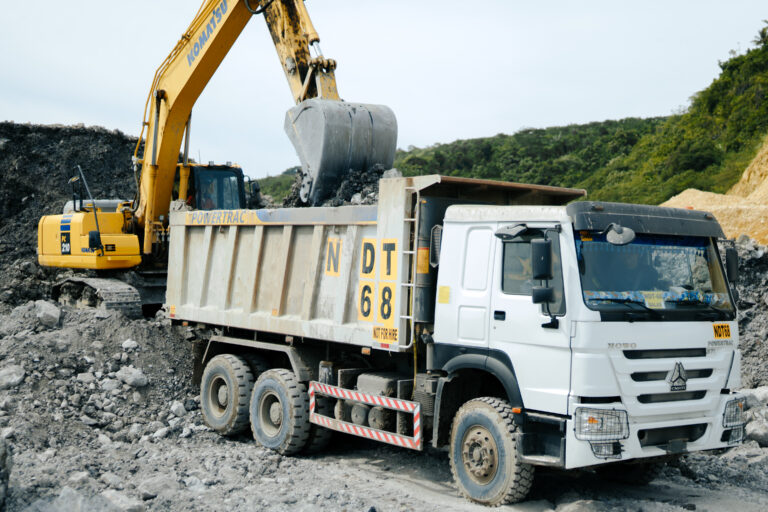
These qualities come through clearly in the work of Grace Okut, a graduate of Greenstone’s Heavy Equipment NC II program who now operates a backhoe. She loads mined materials into dump trucks, carefully calculating the exact tonnage for every haul—precision that keeps ore movement efficient and reflects the same focus Engr. Nofuente describes in the women he has hired.
Beyond the Operator’s Seat
Engr. Nofuente has also observed strong capabilities among women in equipment maintenance planning. While certain repair tasks may require greater physical strength, he noted that women consistently produce thorough and reliable repair documentation, supporting more effective maintenance planning and contributing to higher mechanical availability. These experiences, he said, have encouraged him to recruit more women operators and mechanics going forward.
That growing presence is already visible in hands-on roles across equipment maintenance and welding, where women are proving just as essential to keeping the fleet safe and running as those who operate it.
Mary Jane Domo is one such example. A graduate of Greenstone’s technical livelihood training programs, she now works as a mechanic, carrying out maintenance tasks such as checking the engine oil levels of Articulated Dump Trucks (ADTs)—one of the many routines but essential checks that keep heavy equipment performing reliably in the field. Every ADT that comes through her maintenance bay is also thoroughly inspected before it is released back into operations, a final check that mirrors the same care Engr. Nofuente has observed among women in the workforce, this time applied directly to the trucks themselves. For Mary Jane, no unit leaves her bay until she is confident it is safe for the drivers and operators who will run it next.
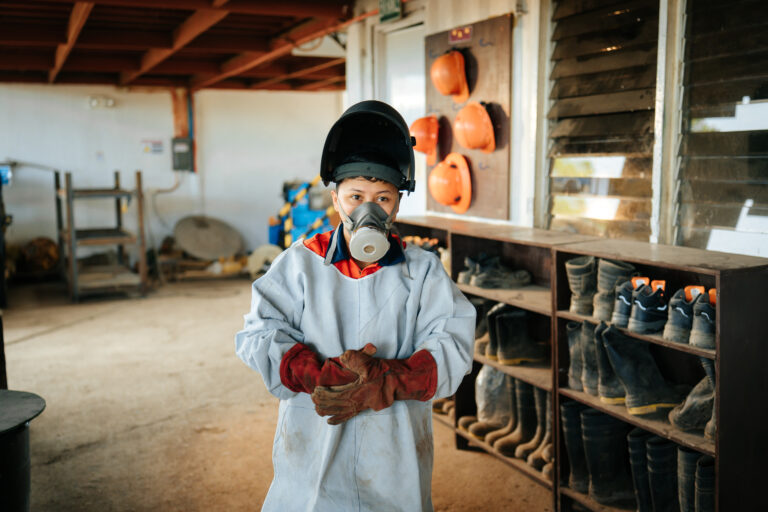
Roselyn Cedula, a welder in Greenstone’s Fleet Management Department, brings that same precision to her craft. Colleagues describe her as someone with a gentle touch—yet her weld output is remarkably consistent, a reflection of both her technical skill and her attention to detail.
Together, Grace, Mary Jane, and Roselyn reflect a broader shift already underway at Greenstone. It is that women are not simply entering roles once considered unconventional for them; they are excelling on it.
Looking Ahead
Greenstone continues to view workforce development as a long-term investment. Engr. Nofuente shared the TVIRD Mining Group’s vision of establishing a dedicated training academy such as the Mabakas Techno Demo Farm that would allow community members with no prior experience to develop the competencies needed to become heavy equipment operators and mechanics.
Livelihood initiatives leave a lasting impact when they enable people to build careers with confidence and purpose. Through its technical livelihood training programs, including the Heavy Equipment NC II Training Program, Greenstone continues to invest in the potential of its host and neighboring communities—developing a skilled and increasingly inclusive local workforce, creating pathways to meaningful employment, and equipping individuals with competencies that remain valuable throughout their professional lives.
Each individual equipped with industry-relevant skills represents more than a new addition to the workforce—they contribute to the long-term growth of their community. Through its programs, GRC continues to demonstrate how skills development can generate lasting economic and social value for the communities it serves. And as more women like Grace, Mary Jane, and Roselyn step into roles once closed to them, they are not only building their own careers—they are helping redefine what a career in mining can look like for the women who follow.
*******