Aligning operations with clean energy solutions for enhanced sustainability
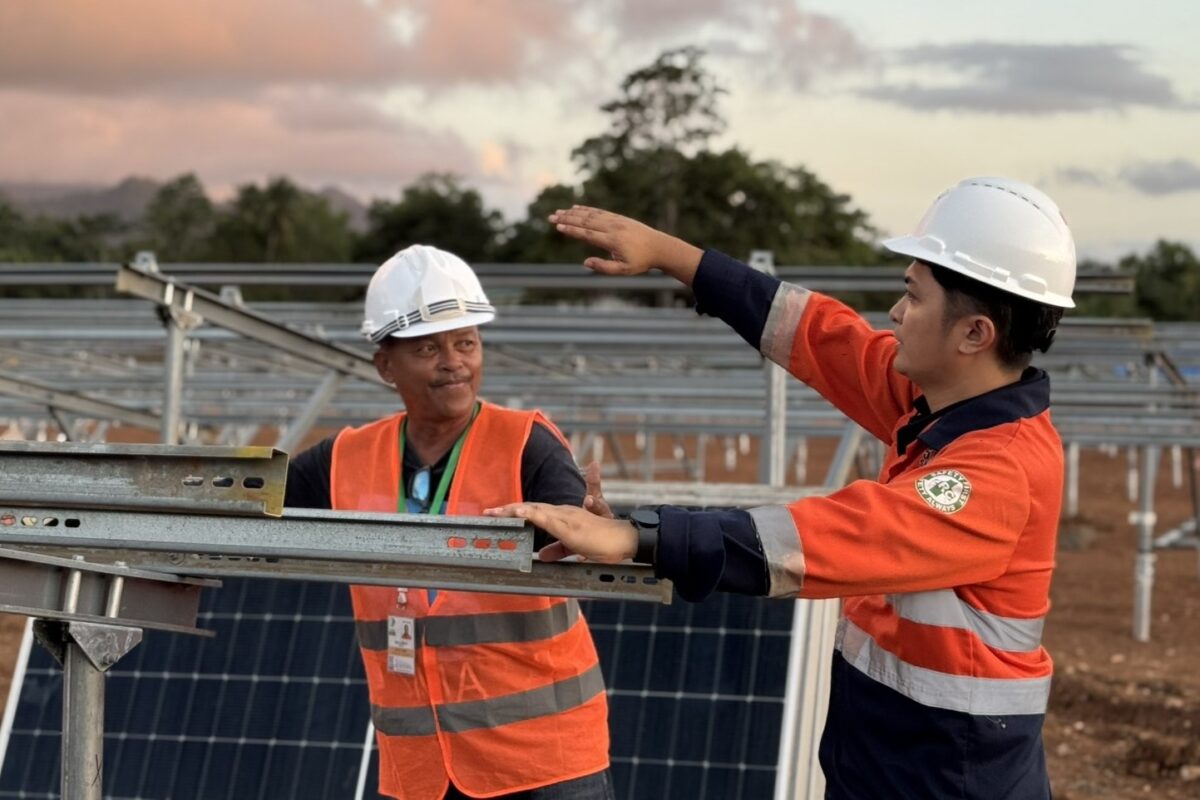 Harnessing the power of the sun. Greenstone Solar Farm Project Head Engr. Rico Hernandez (right) closely supervises the construction of the Siana solar plant, which is intended to reduce the company’s reliance on grid power.
Surigao del Norte / April 2026 — Solar energy has steadily evolved from a niche, experimental technology into a practical component of modern operations. Once regarded as an expensive and idealistic “green” alternative, it is now a reliable energy solution adopted by households and industries alike. What was once considered the future of energy has become a present-day necessity, shaping how we power modern life.
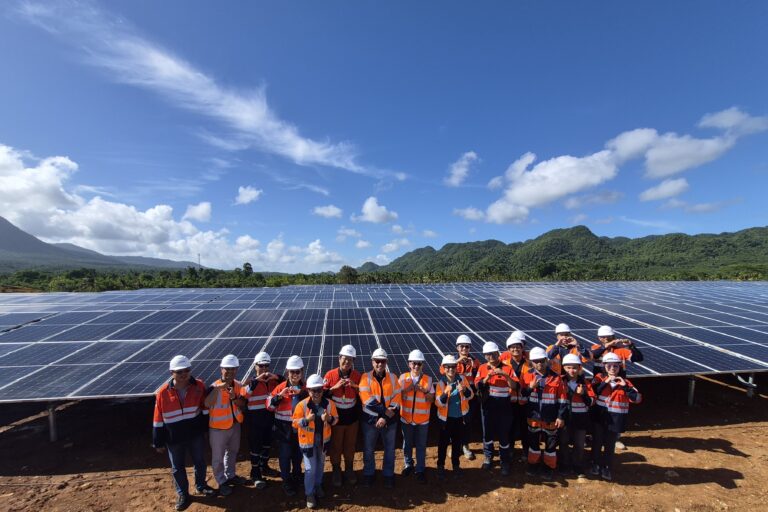
This transition is especially critical in areas where the electricity supply remains unstable or costly. For industries, such uncertainty is more than an inconvenience, often translating into operational delays, downtime, and increased production pressure. In this context, the TVI Resource Development Philippines Inc. (TVIRD) Group is advancing its energy resilience strategy through the installation of a 5.3-megawatt-peak (MWp) solar power facility at its Siana Gold Project, which it manages under Greenstone Resource Corporation.
Power on
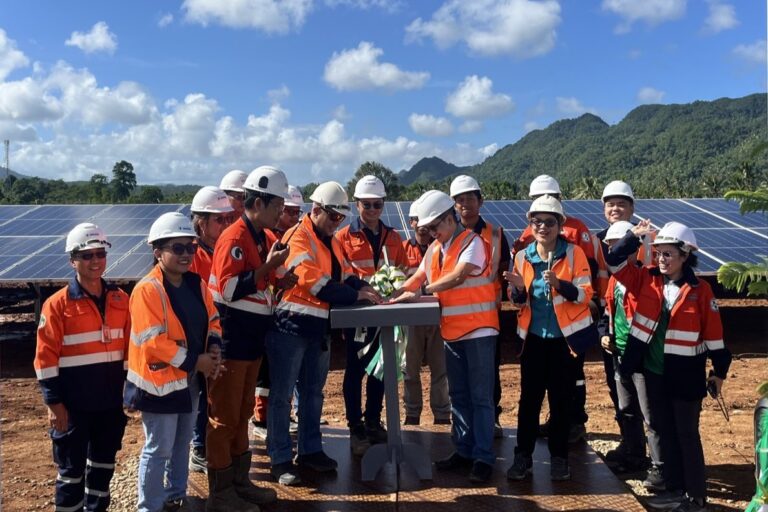
“This Solar Farm Project is the first of its kind here in the Caraga Region where a mining company really put up a large-scale solar farm to help offset its energy requirements and strengthen its power supply,” enthusiastically said Mines and Geosciences Bureau (MGB) Region XIII Director Engr. Francis Glenn Suante during the energization of Phase 1 of the solar plant.
He likewise noted that the project reflects Greenstone’s forward-looking approach to securing reliable power and sustaining renewable energy initiatives. It likewise supports the Philippines’ push for more renewables under the Department of Energy’s National Renewable Energy Program and help move the country towards the goal of raising renewables to 35% by 2030, and 50% by 2040.
A new era of renewable integration
Engr. Rico Hernandez, Greenstone Solar Farm Project Head, described the project as a turning point in how renewable energy is being adopted in large-scale industries. He said it reflects growing efforts within the mining sector to work alongside cleaner energy systems in a more practical and sustained way.
“I see this as a major milestone for the mining industry, showing that large-scale operations can effectively tie up with the renewable energy sector,” he said.
He added that the project also demonstrates that the shift towards cleaner energy is no longer purely aspirational. Instead, it is becoming a practical operational strategy that can be implemented without compromising efficiency or reliability.
Improving operational efficiency and energy independence
Rather than relying solely on external grid power, which can be inconsistent at times, the solar facility is designed to offset a portion of the Siana Gold Project’s energy requirements. This reduces dependence on conventional electricity sources and contributes to lowering carbon emissions associated with operations. For a mining site where continuous and stable energy is essential, this shift supports both operational efficiency and a reduced environmental footprint.
Hernandez noted that solar energy has moved beyond its earlier role as a supplementary source. He explained that improvements in system design and integration now allow solar to contribute significantly to daytime energy demand, particularly in industrial settings with predictable load profiles.
He further explained that this evolution has changed how energy is approached in mining operations, with solar power increasingly incorporated into long-term energy planning rather than treated as an auxiliary option.
Project scope and expected impact
The project is currently under construction and is expected to be completed by May 31. It is projected to generate around 7,943,000 kilowatt-hours (kWh) of electricity annually, covering approximately 16 percent of the Siana Gold Project Process Plant’s total energy needs.
Beyond its operational benefits, this integration of solar energy reflects a broader move towards cleaner industrial practices and more responsible energy consumption. Once completed, the solar farm will span 15.65 hectares and is expected to reduce the Siana Project’s carbon footprint by over 4,100 tons of total CO2 emissions, equivalent to more than 190,000 trees – and thus achieving a greener and more sustainable energy profile.
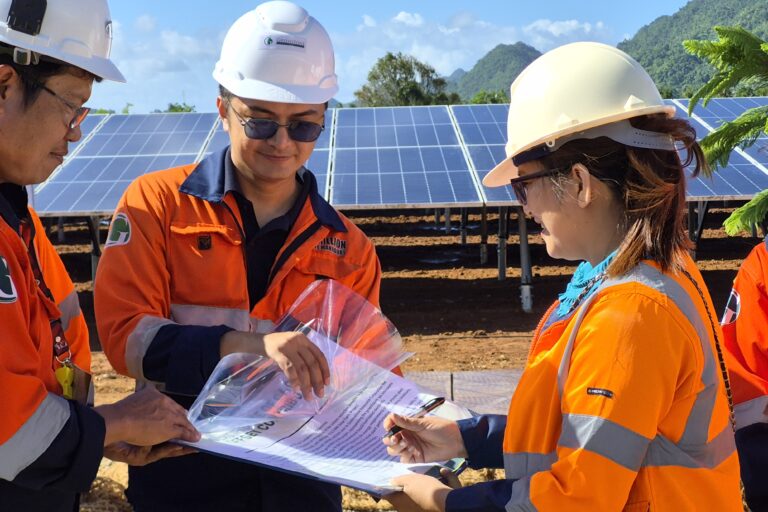
During the event, Engrs. Hernandez and Allan Masana formally handed over the Certificate of Carbon Reduction to TVIRD Tenement Management and Environmental Compliance Director Jesalyn Guingguing.
Hernandez said the timing of the project was a key factor in its implementation. He explained that several enabling conditions were already in place, including available land, a defined energy load, and an established grid connection, which allowed the development to proceed efficiently and without disrupting ongoing operations.
External pressures also supported the decision, particularly rising fuel costs and expectations of higher electricity tariffs, which made renewable integration a more viable and strategic option for the company at this stage.
TVIRD is implementing the project in partnership with PAVI Green Renewable Energy, Inc., reflecting a growing collaboration between industrial operators and renewable energy specialists. This approach helps turn sustainability from a long-term goal into a practical, operational reality, embedded directly into day-to-day industrial processes.
Shifting mindsets in energy use
Beyond technical outcomes, Hernandez highlighted a broader shift in organizational mindset. He said the company is beginning to move away from simply consuming energy towards a more intentional approach focused on optimization and management of energy sources.
“We’re moving from just consuming energy to actually managing and optimizing where our energy comes from,” he said.
What makes this development more relatable is how it mirrors changes already visible in everyday energy choices. Solar energy is no longer limited to large-scale projects or symbolic sustainability efforts. It is being adopted as a practical response to rising electricity costs and the need for greater energy control in everyday settings. At the industrial level, those same pressures take on a larger scale, where reliability and efficiency become operational priorities rather than just cost concerns.
At its core, this solar initiative reflects a broader shift in how energy is being approached today. It is no longer viewed simply as a resource delivered from external sources and consumed as-is. Instead, it is increasingly something that can be generated on-site, managed more efficiently, and integrated into operations — even in industries long dependent on large-scale power infrastructure.
As solar energy grows from rooftop systems to large industrial sites, it is changing the way people think about power — both in everyday life and in business. Whether it’s families trying to manage rising electricity bills or companies working to avoid disruptions, the message is the same: energy isn’t just something you use. It’s something you can plan for, produce on-site, and manage in a smarter, more practical way.
*******